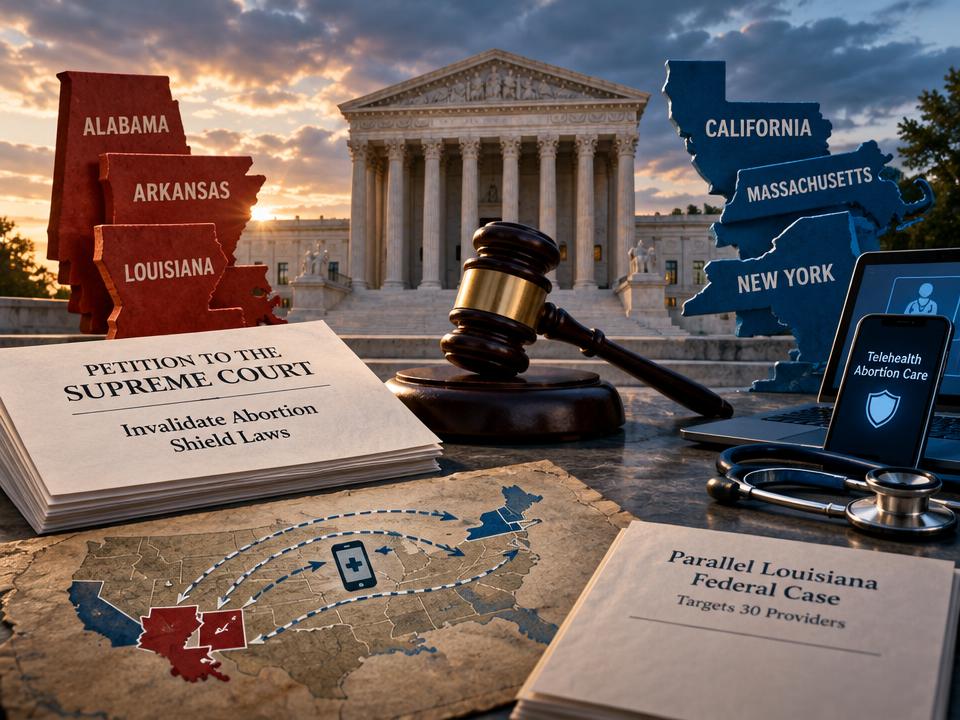
A telehealth abortion prescription has become a six-state constitutional collision. On September 30, Alabama, Arkansas and Louisiana asked the U.S. Supreme Court to strike shield laws in California, Massachusetts and New York—laws that protect providers from legal actions brought by states where abortion is banned.
This is not an appeal after a trial. The three states asked the justices to let them bring an interstate dispute directly to the Supreme Court under its rarely used original jurisdiction. The Court can hear disputes between states at the outset, but does so sparingly. The filing itself does not suspend the challenged laws: the justices would first have to accept the case and then grant relief.
The conflict starts with a prescription written in one state and filled in another. Federal rules permit mifepristone to be prescribed through telehealth and supplied by mail. Providers in states where abortion remains legal can therefore serve patients living in states with bans. After the Supreme Court’s 2022 Dobbs decision returned abortion regulation to the states, 13 states adopted near-total bans, while other states built legal protections for providers and patients.
Shield laws generally limit state cooperation with out-of-state investigations or proceedings involving care that is legal where it was provided. That can mean refusing to assist with subpoenas, investigations or extradition requests. The Southern states say these protections block enforcement of their abortion laws; the states being sued say they safeguard care provided legally within their borders.
The plaintiffs’ constitutional argument turns on a basic federalism question: when state laws conflict across a border, whose rules control? Their complaint invokes the Full Faith and Credit Clause and the principle of equal sovereignty, among other theories. In plain terms, they argue that one state should not be able to make another state’s law ineffective by protecting providers who send medication across state lines. Those are allegations, not findings by a court.
The response from New York and Massachusetts is that the case seeks to export abortion bans into states where the care is legal. New York’s attorney general says the plaintiffs want to punish doctors for providing lawful health care. Massachusetts has vowed to defend its law. The Supreme Court has not decided whether to hear the dispute, much less ruled on those competing claims.
There is a second, more immediate lawsuit. The three states also sued 30 abortion-pill providers and organizations in federal court in Louisiana, accusing them of misconduct and seeking court orders and other remedies. That case targets providers directly; the Supreme Court complaint targets the state laws that, the plaintiffs contend, shield those providers from enforcement.
The stakes reach beyond abortion policy. If the justices accept the case and rule on the merits, their decision could shape when states must honor one another’s legal processes, how far state enforcement can reach, and what protections providers can rely on when treating patients remotely. For patients, the dispute may affect whether telehealth prescriptions remain available across state lines—and what privacy or legal risks could follow.
The takeaway: The central question is not simply whether abortion is lawful. It is who gets to enforce a state’s law when a provider, patient and prescription are spread across different states. The justices’ first move—whether to take the case at all—could determine how that conflict proceeds.