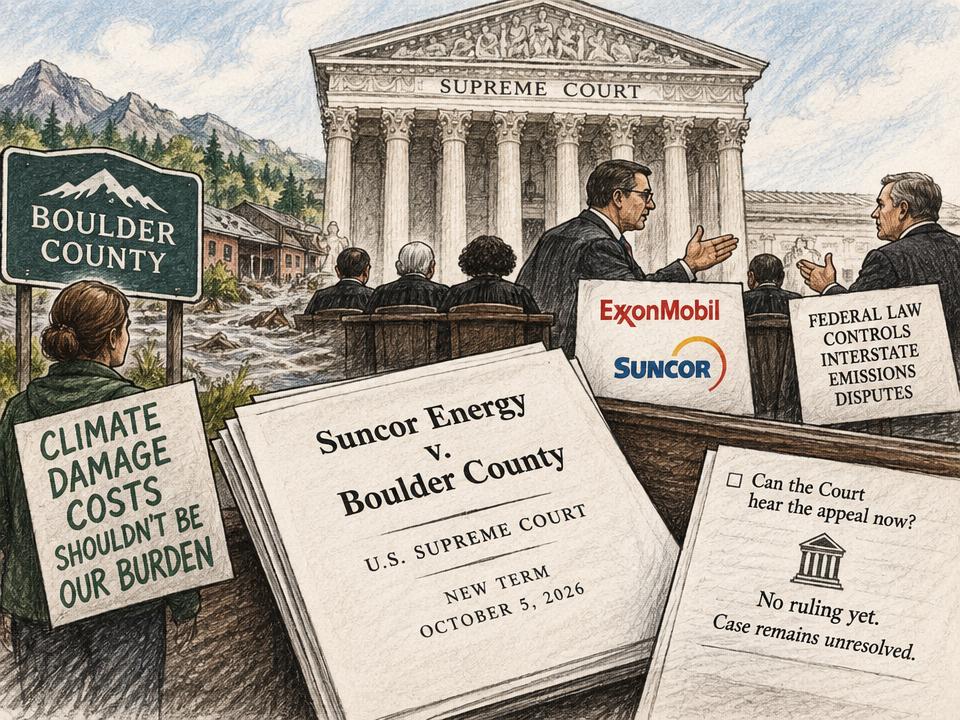
The Supreme Court opened its new term Monday with a case that could shape whether cities and states can use their own laws to seek damages from fossil-fuel companies over climate-related harm. The stakes extend beyond Boulder, Colorado: dozens of similar lawsuits are pending nationwide, with billions of dollars potentially at issue.
Boulder’s city and county sued ExxonMobil and Suncor Energy in 2018. Local officials allege the companies misled the public about the effects of fossil fuels and say climate-related disasters are driving costs for their communities. They seek damages under state law; the case has not reached a trial on those allegations.
The companies argue that claims tied to greenhouse gases emitted across state and national borders belong under federal law, not a patchwork of state lawsuits. They contend federal authority over interstate emissions—and the Clean Air Act’s regulatory framework—blocks Boulder’s claims. The Trump administration supports the companies’ position.
Boulder counters that it is seeking compensation for alleged harm within Colorado, not trying to regulate emissions elsewhere. Its position is that ordinary state-law claims can address local injuries without setting national climate policy.
The justices must first resolve a procedural question: whether they have jurisdiction to hear the appeal at this stage. If they do not, they could send the case back without deciding whether federal law preempts the claims. That means Monday’s arguments may not settle the broader fight.
The case is a test of how far local governments can go in court when they say corporate conduct has burdened public budgets. A ruling for the companies could threaten climate-damage suits around the country; a ruling allowing Boulder’s case to proceed would let it continue in state court, where the allegations can be tested. The Court issued no decision with the arguments, and the dispute remains unresolved.