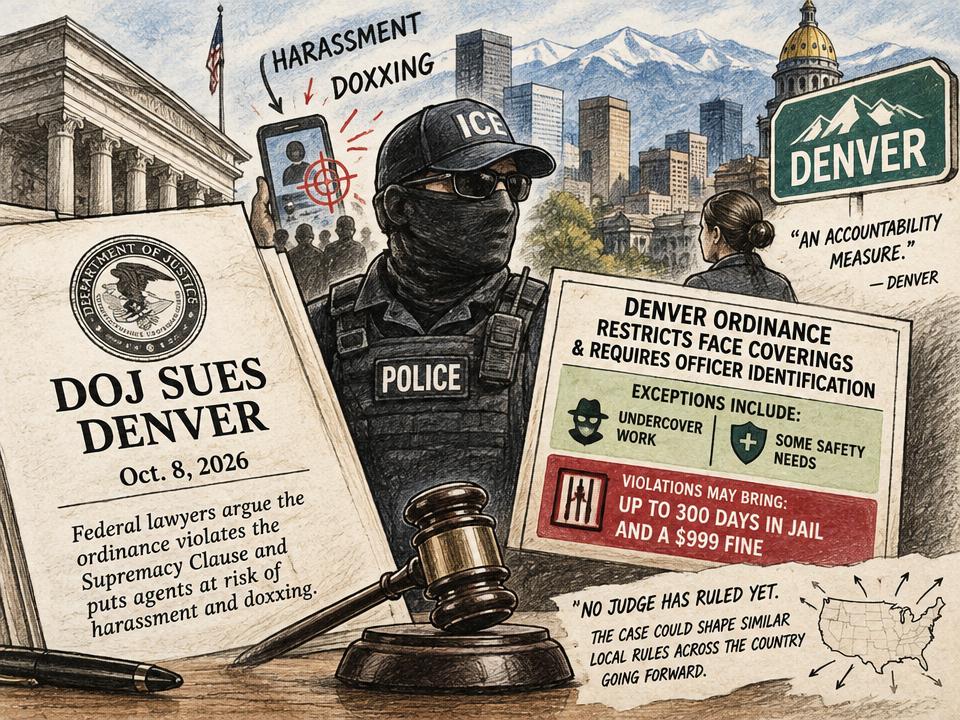
The federal government is asking a judge to block Denver from enforcing a rule that could require federal immigration officers to show their faces and identify themselves during arrests. The Justice Department’s October 8 lawsuit turns a local transparency measure into a constitutional fight over who controls federal agents on city streets.
Denver’s City Council unanimously approved the ordinance in March. It restricts law-enforcement officers from concealing their faces during arrests and detentions and requires visible identification. The measure includes exceptions for undercover work and certain safety situations. The complaint names Denver, Mayor Mike Johnston, City Attorney Miko Brown and Police Chief Ron Thomas; DOJ seeks a permanent bar on applying the requirements to federal officers.
The department argues the city crossed a constitutional line: under the Supremacy Clause, local rules cannot regulate federal operations. It also says masks protect agents from doxxing, harassment and threats, and that the ordinance could compromise law-enforcement work. Those are the government’s allegations, not findings by a court.
Denver says the rule is about accountability. A spokesperson for Johnston told Axios that residents should know who is arresting them and why. The ordinance carries potential penalties of up to 300 days in jail and a $999 fine, though the federal suit seeks to prevent those requirements from being applied to federal agents.
The practical conflict is immediate: a person encountering a masked officer during an arrest may want to know the officer’s identity, while federal officials say revealing it can put agents and their families at risk. The lawsuit asks whether a city can impose identification and clothing rules on federal officers carrying out federal duties.
The case is part of a wider Justice Department push against similar local restrictions in other jurisdictions. A federal judge has not ruled in Denver’s case. The decision could affect how far cities may go in setting accountability rules for federal officers—and how much control the federal government retains over its agents in local communities.