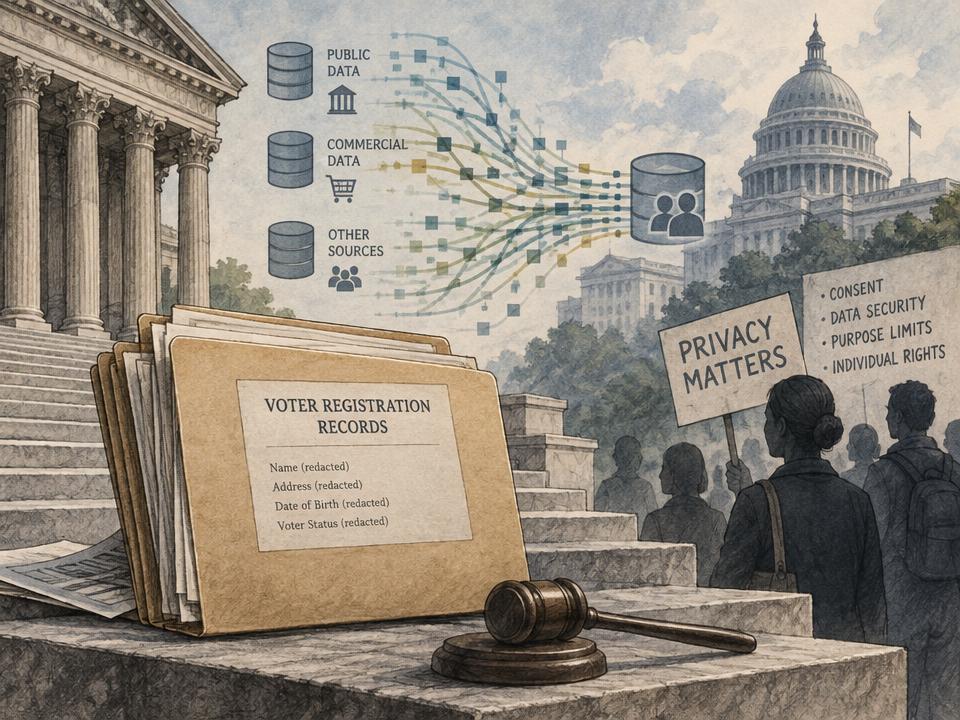
Homeland Security’s voter-data sweep is now the target of a lawsuit seeking not only to stop future collection, but to make the government erase records already gathered. Filed October 15 in federal court in Washington, the case alleges DHS obtained voter files from at least 47 states, potentially touching information on most of the nation’s roughly 174 million registered voters. No judge has ruled on this case.
The League of Women Voters, the Electronic Privacy Information Center and the League of United Latin American Citizens allege DHS exceeded its authority and violated federal privacy safeguards while investigating claims of noncitizen voting. They ask the court to declare the collection unlawful, bar DHS from using or sharing the data, and order it deleted. Records cited in the case show DHS’s Homeland Security Investigations had ingested 50.6 million records from the Justice Department and 48.4 million from other sources by June, according to Democracy Docket. Those are record counts, not proof of 99 million distinct voters.
The alleged data pipeline reaches beyond voter files. reported in September that DHS used information from a commercial data broker to supplement public rolls and matched records against immigration and other federal databases. An internal email and officials cited by described false positives, including U.S. citizens matched because of similar names and citizens born abroad. Such mismatches can bring scrutiny even though the new lawsuit has not established that anyone was wrongly flagged under this particular policy.
Timing adds urgency: the suit arrived less than three weeks before the November midterms, as federal officials press states to investigate people flagged as likely noncitizens. DHS has defended its investigations as lawful and professionally conducted. On October 9, a D.C. judge separately blocked the Justice Department’s voter-roll policy, finding it violated privacy and procedural laws. That ruling does not decide this DHS case. The new lawsuit could test how far federal agencies may combine election records with commercial and immigration data—and whether a court will order the government to dismantle the collection.