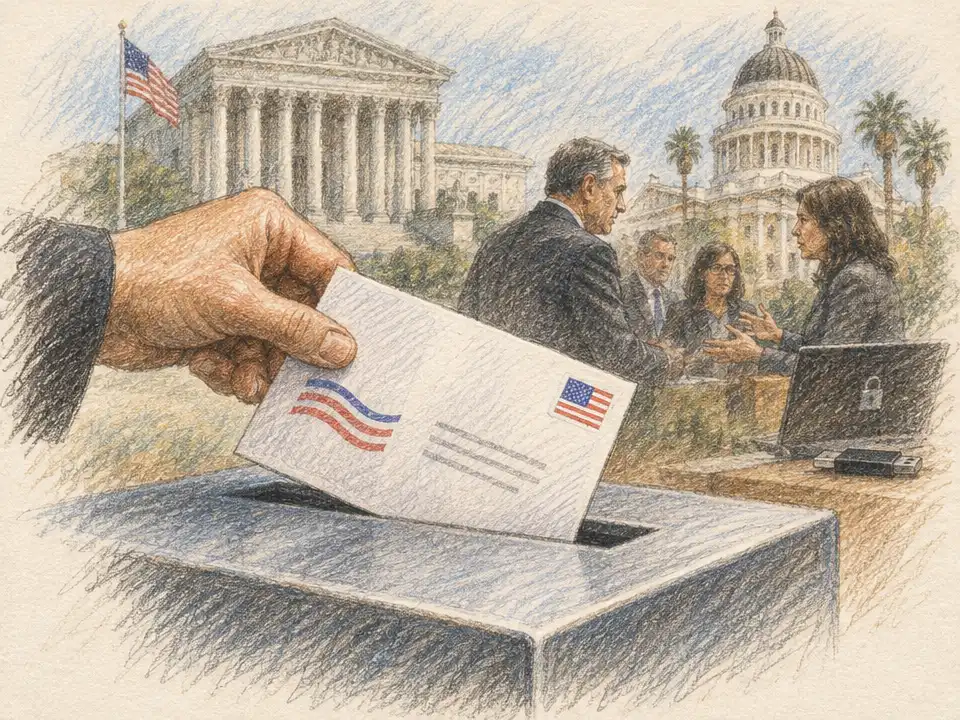
The Justice Department is asking a federal judge to hold mail ballots linked to more than 20,000 California voters it calls “likely noncitizens”—and has warned election officials they could face criminal exposure if they count them. The dispute comes before the November 3 midterms, as California’s mail-ballot system serves more than 23 million registered voters.
On October 15, DOJ sued California, Secretary of State Shirley Weber and Los Angeles County Registrar Dean Logan. It wants the state barred from counting ballots associated with the flagged voters until their citizenship is confirmed. Two days earlier, Acting Deputy Attorney General Trent McCotter had sent county officials a password-protected thumb drive and given them 48 hours to review the names. County officials said they could not assess the list’s basis and cited security protocols; Weber said the government had not provided evidence or explained its method.
Then, on October 16, DOJ escalated the pressure. McCotter warned that officials who knowingly tabulate ballots cast by people identified by federal agencies as noncitizens risk being treated as aides to a federal crime. Federal law prohibits noncitizens from voting in federal elections. The warning is not a finding that the people on the list are noncitizens—or that election workers have committed a crime.
That distinction is at the heart of the lawsuit. California says DOJ has not substantiated its list and argues that setting aside ballots based on unverified claims could threaten eligible voters. State officials have also argued that federal law restricts systematic voter-roll purges within 90 days of an election. The case raises a practical question for the court: can federal officials require ballots to be held before a voter’s citizenship is verified?
As of October 18, the dispute remained unresolved. DOJ says California failed to cooperate in addressing suspected ineligible registrations; state and county officials reject the demand. The court’s handling of the request could affect how election officials respond to federal voter lists in future elections, but the allegations against these voters have not been proven.