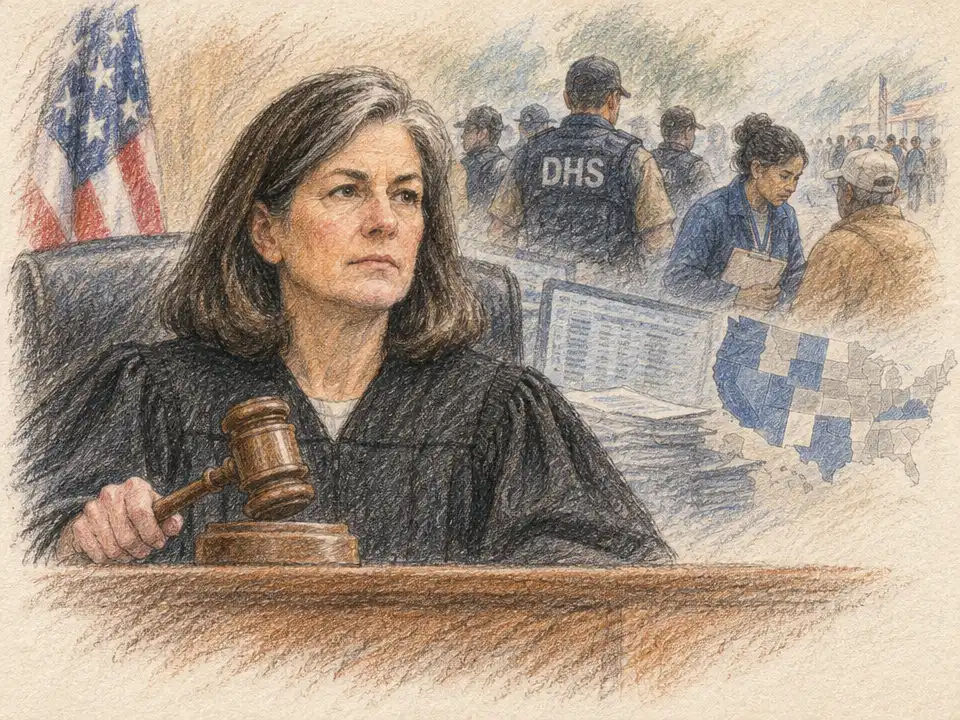
A federal judge has drawn a narrow but consequential line before the November 3 midterms: DHS may not use certain field investigations to question people about voting eligibility in nine states when agents know—or reasonably should suspect—the person is a U.S. citizen. The order targets how the government investigates, not whether noncitizen voting is illegal.
Judge Araceli Martínez-Olguín issued the preliminary injunction on Wednesday, October 21, after an October 19 hearing. It covers California, Connecticut, Georgia, Missouri, Nevada, New York, Pennsylvania, Washington and Wisconsin. It bars election-related field operations and interviews involving actual or suspected citizens, plus certain operations against citizens based entirely on records generated by DHS’s voter-matching policy. The order is stayed until 5 p.m. Friday, October 23, giving the administration time to seek appellate relief. If it takes effect, it ends on Election Day, November 3, at 8 p.m. or when polling places close, unless the court changes it.
The judge’s concern was the chain from data to doorstep. DHS’s August Unlawful Voter Initiative built investigation lists from multiple sources. The opinion describes 48.2 million records from independent sources of questionable provenance and 50.6 million records from Justice Department voter rolls—or commercial versions for jurisdictions that did not provide data. DHS used software tools to assemble profiles. Officials acknowledged that similar names, incomplete files, outdated citizenship information and clerical errors could produce false matches. The court noted there is no federal database that simply confirms every U.S. resident’s citizenship status.
Then came the speed requirement: officers were directed to review at least 40 suspected cases and spend no more than 12 minutes using commercial databases to screen each person from the list. These are investigatory leads, not confirmed violations. That distinction matters: an incorrect match can expose a citizen to questioning just before an election, when voters and community groups are trying to register, inform and assist people.
The plaintiffs included the California Nurses Association, National Nurses United, Voto Latino Foundation, San Francisco and Santa Clara County. The judge did not decide every constitutional or administrative-law claim. Instead, she found the nurses’ organizations likely to win on a specific Voting Rights Act theory: that DHS’s methods intimidate people who urge or help others vote. The court cited evidence that members had withdrawn from election outreach because they feared physical, legal or reputational harm. Section 11(b) protects that assistance as well as casting a ballot.
The administration argued that federal law authorizes investigations into unlawful voting. The judge agreed that federal officials may investigate unlawful voting, but said that authority does not require targeting citizens using unreliable data or using methods that deter voter-assistance work. The injunction does not stop every DHS investigation, change voter-eligibility rules or decide who may vote. It restricts specified field tactics in the nine named states.
The ruling lands amid separate court fights over federal access to voter information. On October 15, the Associated Press reported that advocacy groups alleged DHS had obtained voter files from at least 47 states. That allegation is still being litigated. The Justice Department also sued California over more than 20,000 names it identified as likely noncitizens, seeking to prevent ballots from being counted. Those are different cases, but they share a practical problem: when election decisions rely on disputed data, errors can reach voters before a court can resolve them.
The immediate test is whether the administration appeals before Friday’s stay expires. This is a preliminary injunction, not a final judgment, and its geographic and operational limits matter. But its central warning is concrete: enforcement authority does not make an unreliable identification process harmless when the people caught in it may be eligible voters—or the neighbors helping them participate.