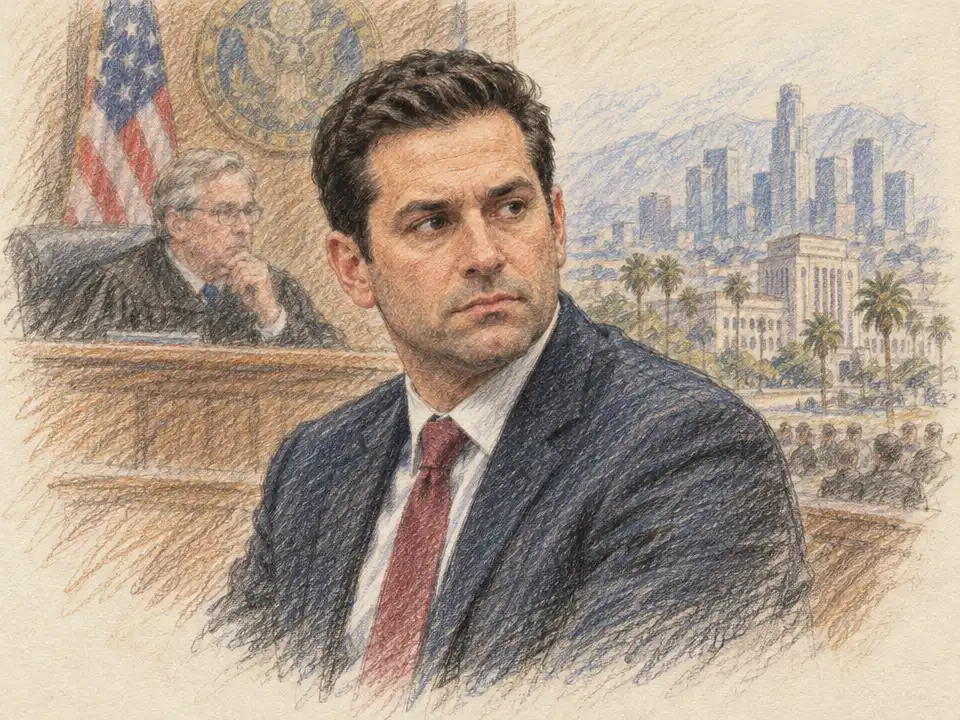
A federal judge ruled Tuesday that Bill Essayli is unlawfully serving as Los Angeles’ top federal prosecutor, challenging the Justice Department’s route around Senate confirmation. The decision bars him from participating in or supervising two criminal cases—but does not dismiss their indictments, and the restriction is not yet in effect.
The dispute turns on how long an interim U.S. attorney can lead a federal office without Senate confirmation. Essayli was appointed acting U.S. attorney in 2025. Near the 120-day limit, then-Attorney General Pam Bondi appointed him first assistant and special attorney, allowing him to keep directing the office under a different title. The Justice Department later revised his delegated authority, but U.S. District Judge J. Michael Seabright found that change did not fix the underlying problem.
Seabright’s ruling drew on an August decision by the 9th Circuit involving Nevada prosecutor Sigal Chattah. The appeals court rejected a similar arrangement in which an official was installed as first assistant and then given the powers of an acting U.S. attorney. Seabright found the department’s approach to Essayli materially similar. The administration has asked the Supreme Court to review the Nevada dispute; the justices have not said whether they will take it up.
The two cases at issue involve Jaime Hector Ramirez, charged with possessing a firearm and ammunition as a felon, and Tu Anh Tran, charged with possessing stolen property from an interstate or foreign shipment. Seabright declined to throw out either indictment, finding the defendants had not shown the substantial prejudice needed for that remedy.
The judge delayed the disqualification order while the government considers an appeal, giving it five business days to seek a stay. Essayli says the president and attorney general can choose Justice Department supervisors and that the Supreme Court will ultimately decide the question. The office serves seven counties and nearly 20 million local residents, making the fight over who may lead it consequential well beyond two prosecutions.