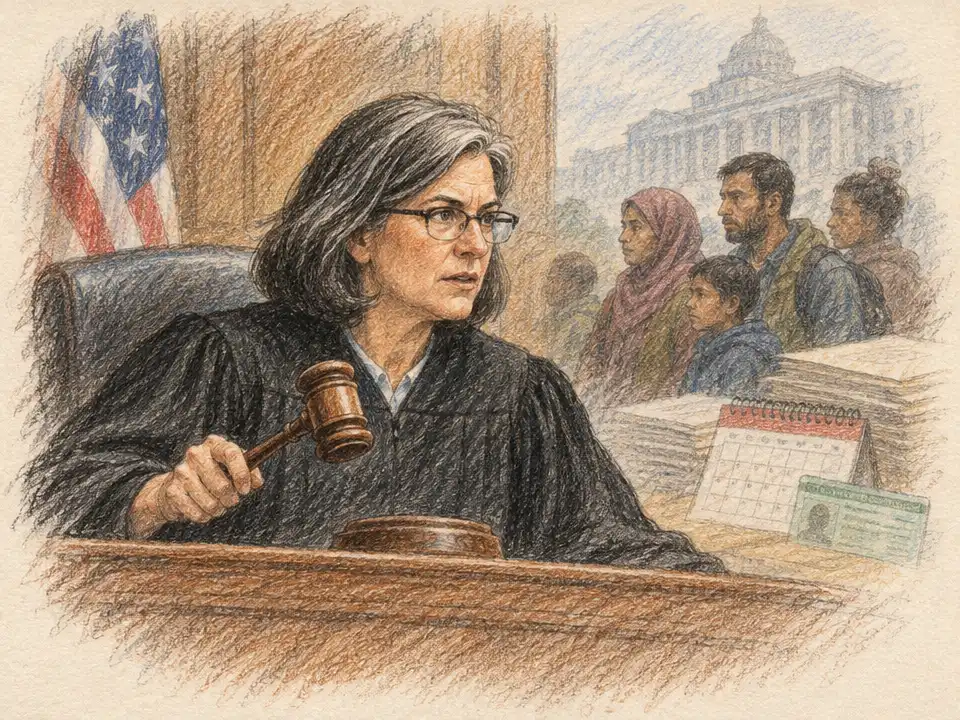
A federal rule that gave refugees just 10 days to fight the loss of their legal status is temporarily on hold. On October 27, U.S. District Judge Julia Kobick in Boston issued an emergency pause through November 6, blocking the government from applying the shortened deadline and enforcing notices already issued under it.
The rule took effect October 14 and cut the response window from 30 days to 10. Under the government’s procedure, refugees who miss the deadline forfeit their chance to rebut the allegations in a termination notice. Losing refugee status can also end work authorization, raising the stakes of a missed deadline.
The emergency order came one day after six refugee-service and advocacy organizations and four refugees filed a proposed class-action lawsuit. They challenge the deadline change as well as a freeze on some refugees’ green-card applications and a policy requiring additional screening. One plaintiff, identified in the complaint as a 27-year-old Afghan refugee, entered the United States in 2024 and has an adjustment-of-status application pending, according to reporting on the filing.
The administration says the rule is meant to strengthen screening, address fraud and protect public safety and national security. Refugee advocates argue that 10 days can leave people too little time to find a lawyer, gather documents or respond to allegations—particularly after refugees have already undergone extensive vetting.
The ruling is a short-term procedural shield, not a final judgment. It does not decide whether the rule is lawful or resolve the lawsuit’s broader challenges to the other policies. Unless the court extends or replaces the pause, the 10-day deadline could return after November 6. The case now puts the government’s effort to speed up status reviews against refugees’ ability to contest those decisions in court.